
Introduction
As automotive technology advances, intelligent vehicles have become reality – powered by an unsung hero: the Telematics Box (T-Box). This "smart brain" connects vehicles to the digital world, enabling transformative driving experiences.
T-Box Overview
The T-Box is the core vehicular communication module that collects, processes, and transmits operational data while enabling wireless control between devices.
Key Functions
Bridges CAN bus networks with external systems (4G/5G, OEM servers, IoT)
Enables remote commands: engine start/stop, climate control, door/window operation
Integrates MCU for real-time ECU communication and data routing
Supports OTA updates and emergency call (eCall) services
General Application Block Diagram of the Vehicle-mounted T-BOX System
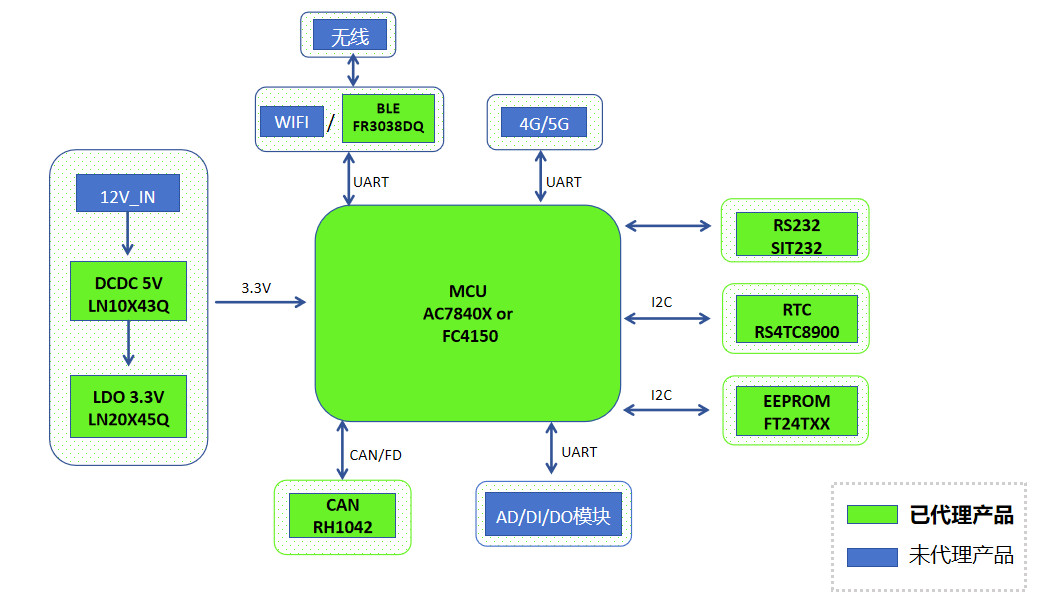
矽力杰的电源T-BOX推荐构图(下图)
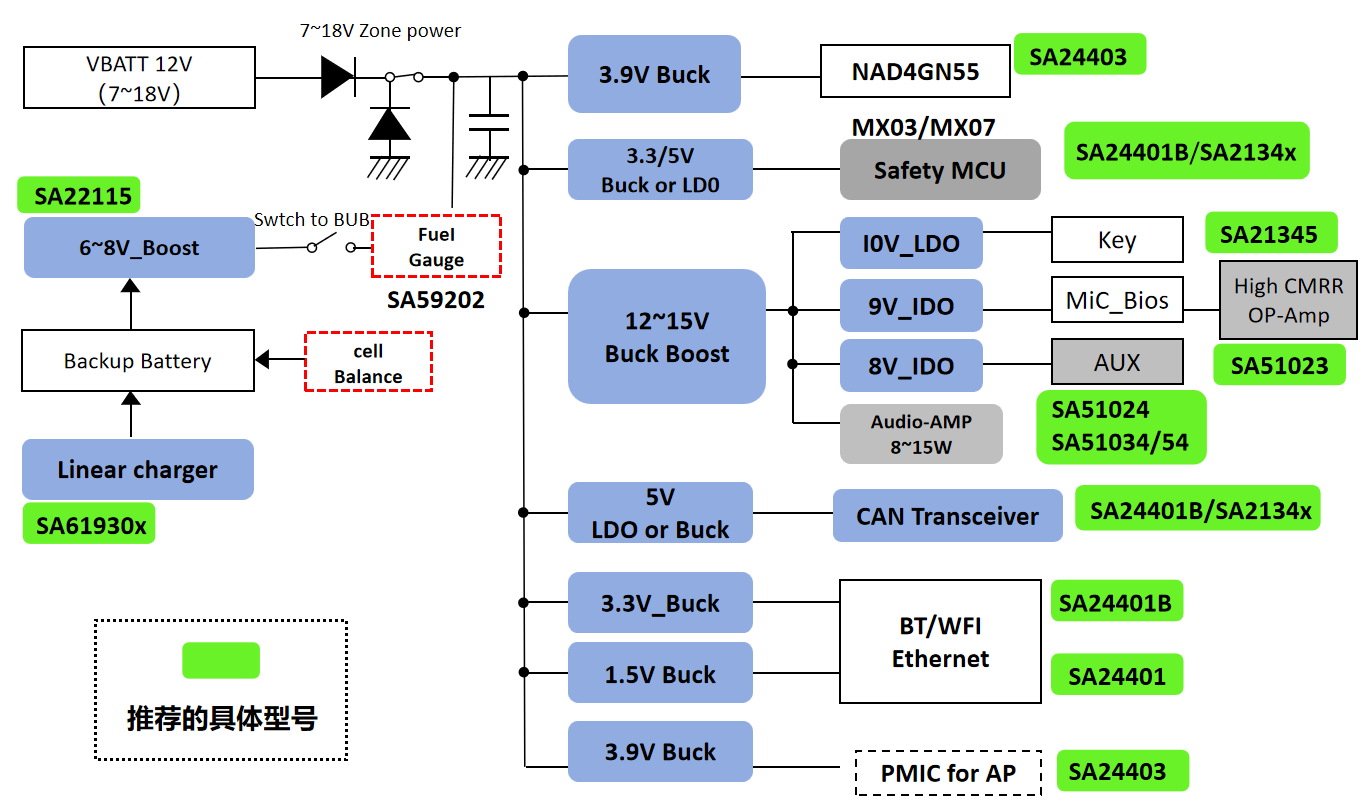
Recommended Domestic Chips for Vehicle T-BOX Solutions

|
Brands |
Function |
Selection |
|
Autochips |
MCU |
AC7840XAC7842X |
|
Flagchip |
MCU |
FC4150 |
|
LEN |
DCDC |
LN10X43Q1 |
|
LDO |
LN20x45Q1 |
|
|
SIT |
RS232 |
SIT232、SIT232E、SITE232E |
|
RHC |
CAN |
RH1042Q |
|
FMD |
EEPROM |
FT24AXX |
|
Raystar |
RTC |
RS4TC8900 |
|
FREQCHIP |
BLE |
FR3038DQ |
|
Silergy |
High-Voltage LDO |
SA21345Series |
|
High-Voltage Buck |
SA24401/3 |
|
|
2A/3A/6A Low-Voltage Buck |
SA23002/3/6 |
|
|
1.2V~25V, 15A Sync. Boost |
SA22115 |
|
|
500mA LDO + Linear charger |
SA61930 |
|
|
Fuel Gauge |
SA59202 |
|
|
High CMRR Audio Operational Amplifier |
SA51023 |
|
|
10 W Class-D Audio Amplifier |
SA51024 |
|
|
21 V, 8/20 W Class-D Audio Amplifier |
SA51034/54 |
|
|
40 V, 8/22 W Class-D Audio Amplifier |
SA51510/11 |
|
|
LIN/CAN ESD Protection Device |
SATO3N24/SAT01N24 |
Key components of a T-BOX system:
AutoChips AC7840x (MCU)
Founded in 2013 as one of China's earliest automotive chip designers (wholly-owned by NavInfo), AutoChips operates R&D centers in Hefei, Shenzhen, Shanghai, and Wuhan. Its product portfolio includes market-leading automotive MCUs, SoCs, TPMS chips, and audio amplifiers, with MCUs deployed in >95% of domestic OEMs and 90M+ units shipped globally.
AC7840x Series Highlights:
120MHz ARM Cortex-M4F core (AEC-Q100 certified)
Memory: 1MB Flash (dual-bank ECC) + 128KB SRAM (ECC)
Interfaces: CAN-FD, SPI, I2C, UART/LIN, 12-bit ADC
Security: ISO 26262 ASIL-B compliant with AES-128, TRNG, and 17-key management
Ultra-Low Power: 32KB retention SRAM in standby (RTC/GPIO wakeup)
Technical Superiority:
5.5V tolerance for 12V/24V systems
<2μA deep sleep current
-40°C to +125°C operational range


Flagchip | FC4150Fx (MCU)
Founded in 2020, Flagchip specializes in high-performance, automotive-grade microcontrollers (MCUs). The company develops solutions for Body Electronics, Infotainment, Domain Controllers, Chassis, Safety, Powertrain, and Battery Management Systems, fully compliant with AEC-Q100 and ISO 26262 functional safety standards.
FC4150 is a high-performance ASIL-B automotive MCU from Suzhou Flagchip Microelectronics, designed for intelligent body control applications.
Key Features:
Cortex-M4F core with DSP instructions, FPU, and 8 KB instruction cache, up to 150 MHz
Memory: Up to 2 MB Flash, 256 KB D-Flash, 256 KB ECC SRAM
Connectivity: 6 FlexCAN modules (some CAN-FD/PNET), 10/100 Mbps Ethernet with IEEE 1588 & AVB
Safety & Protection: ASIL-B support, HSM, UVLO, thermal shutdown, cycle-by-cycle current limit, short-circuit protection, internal soft-start
Applications: Body Electronics, Infotainment, Domain Controllers, Chassis, Safety, Powertrain, Battery Management
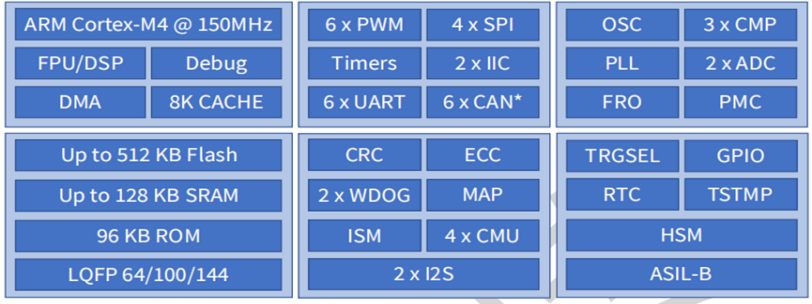
FC4150Fx System Block Diagram
FC4150Fx Series Product Selection:
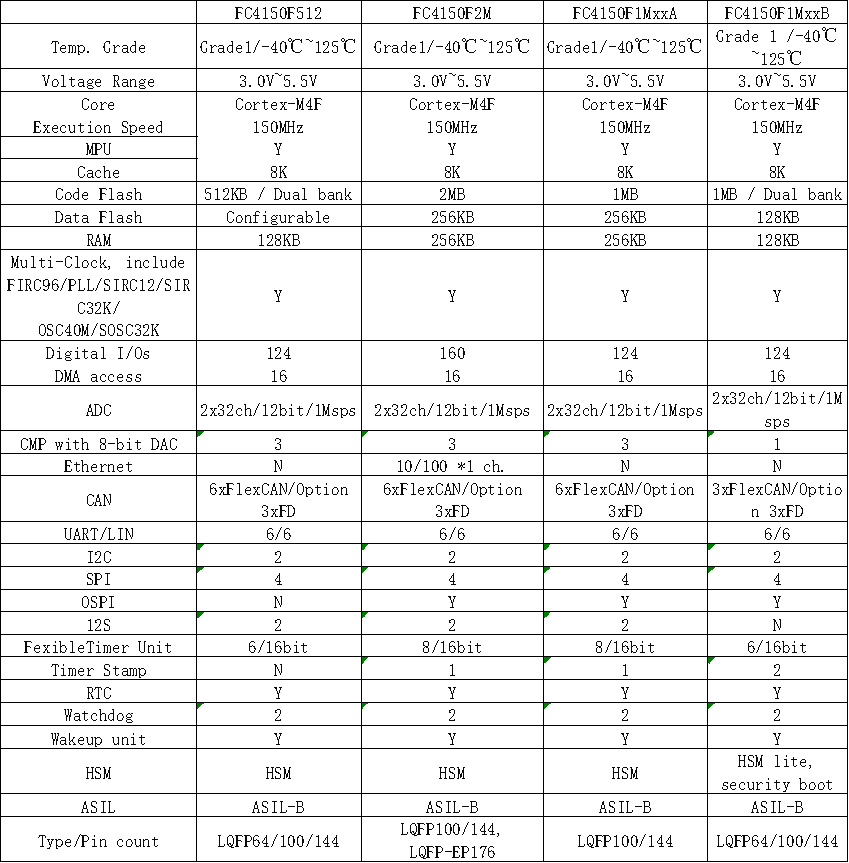
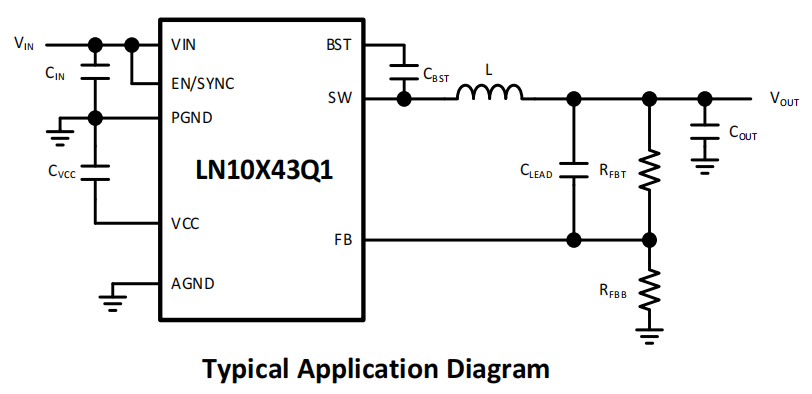
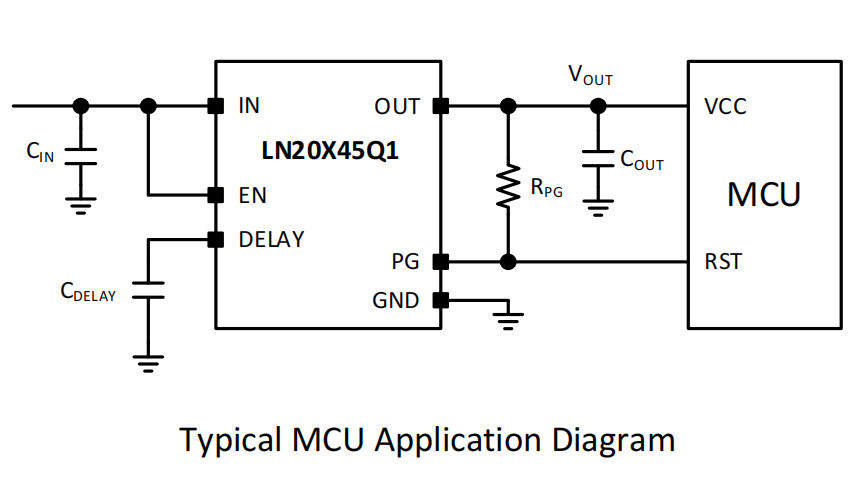
LEN | LN10x43、LN20x45(PowerDCDC/LDO)
Founded in 2017,LEN specializes in automotive power management ICs including DC/DC converters, LDOs, multi-rail power supplies, LED drivers, and high-side switches. With 200M+ units shipped to 40+ global automakers and 200+ suppliers, the company holds 57 invention patents (14 international) and 10 utility patents. Its full-process automotive quality system ensures zero-defect (0 DPPM) reliability from chip design to post-sales support.
RHC| RH1042Q(CAN)
RHC is a fabless semiconductor company founded by former Maxim engineers, specializing in high-reliability automotive and industrial analog chips.
Product Roadmap:
Short-term: Automotive/industrial CAN/LIN/RS-485 transceivers
Mid-term: Automotive SBCs for new energy vehicles
Long-term: High-performance automotive/industrial analog IC solutions
RH1042Q - A next-generation high-speed 8Mbps CAN transceiver compliant with ISO 11898-2:2016 and SAE J2284-1 to SAE J2284-5 standards. This device provides an interface between CAN protocol controllers and the physical two-wire CAN bus for automotive and industrial applications.
Operating Modes:
Normal mode (supports data rates over 8Mbps)
Standby mode (ultra-low current consumption)
Key Features:
Extended common-mode input range: -40V to +40V
Integrated level translator for 2.8V-5.5V MCU interfaces
Protection features:
Thermal shutdown
Current limiting
Dominant timeout
±70V bus fault protection
Undervoltage protection
ESD protection:
±25kV HBM
±15kV IEC air-gap discharge
±8kV IEC contact discharge
|
Part Number |
RH1042Q |
|
VCC (V) |
4.3-5.5V,GB/T28046.2--2019 |
|
VI0 (V) |
2.8-5.5V |
|
Data Rate (Max) |
8Mbps |
|
ISO 11898-2:2016 Compliant |
|
|
Bus Fault Voltage (V) |
±70V |
|
Bus ESD Rating |
±25kV(HBM)±15kV(Air Discharge)±8kV(Contact Discharge) |
|
All Pins ESD Rating |
士150OVCDM(Charged Device Model) |
|
Current |
Normal: dominant: <30mAstandby <2uA |
|
BCI Current Test |
400mA |
|
Operating Temperature |
-40C-125C |
|
Package |
S08 |
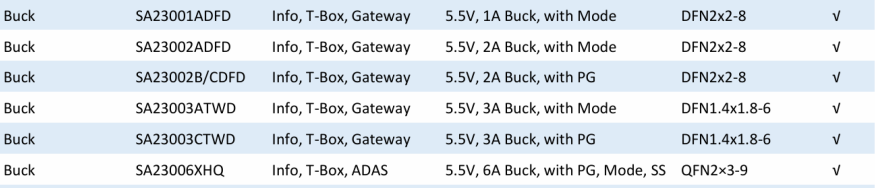
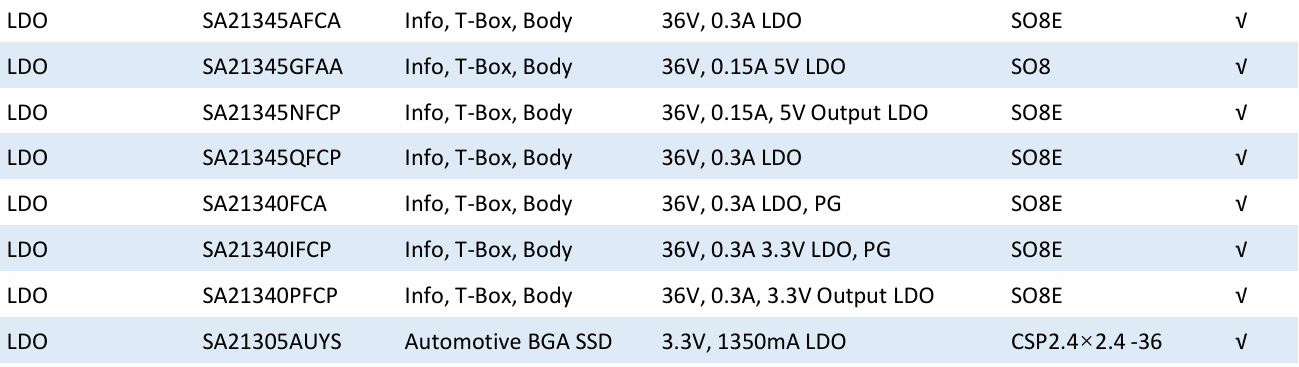
Silergy | SA2300/SA21340
Silergy - A global leader in analog ICs and one of the fastest-growing semiconductor companies, Silergy (founded 2008 in Sunnyvale, CA) addresses the world's toughest technical challenges through innovation. Its end-to-end analog/power/signal chain solutions serve automotive, industrial, consumer, cloud, and communication markets with:
Cutting-edge integration
Comprehensive product lines
Global distribution
Featured Products:
SA2300 Series
SA21340
(See parameter tables below)


FMD | FT24AXX
FT24AXX: AEC-Q100 certified, operating temperature -40°C to +125°C. Since its launch in 2005, the full series of EEPROM products has been mass-produced using a wafer-fabrication platform, offering high
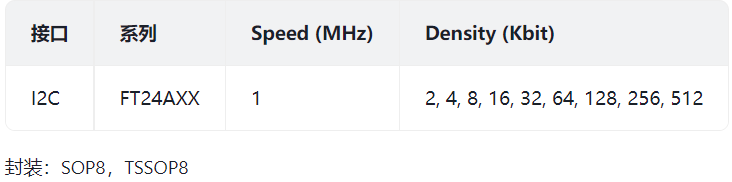
Functional Description
Data Storage & Readout
As an EEPROM chip, it provides non-volatile data storage via I²C interface for configuration parameters, user settings, and historical records, ensuring data retention during power loss.
Multi-device Compatibility
Features standard I²C interface and common packaging for seamless integration with various MCUs and components.
Configurable Addressing
Supports multi-byte addressing for connecting multiple devices on the same I²C bus, enabling capacity expansion and categorized data storage.
Low-power Operation
Optimized for battery-powered devices with minimal standby/active consumption to extend battery life.
FREQCHIP | FR3038DQ(BLE)
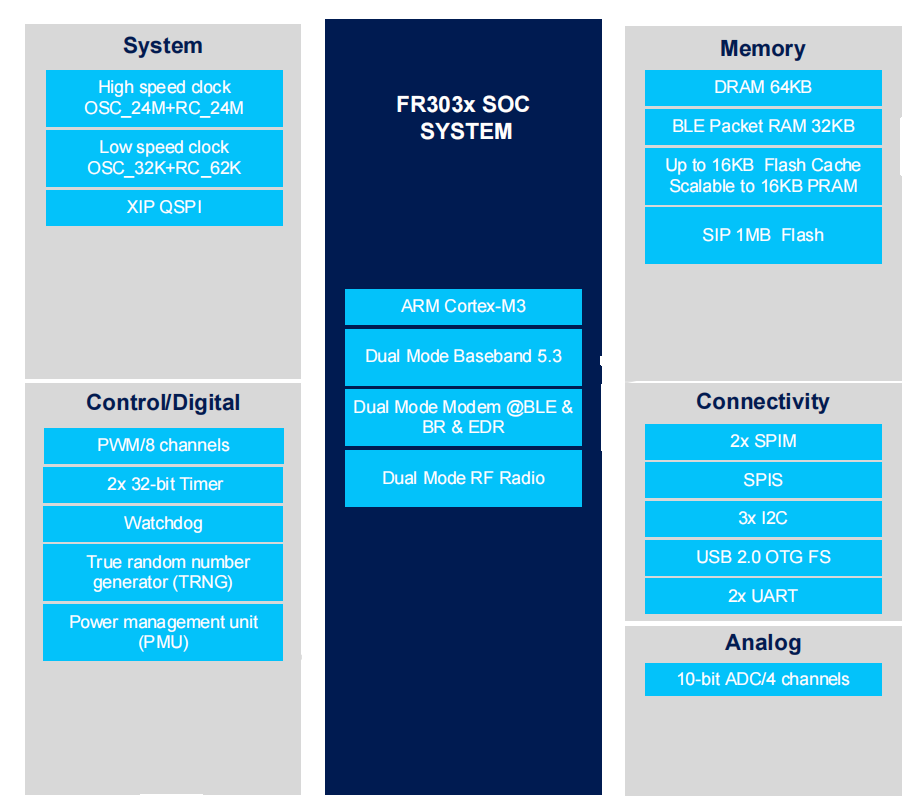
FR3038DQ - An AEC-Q100 Grade 2 certified dual-mode Bluetooth MCU for automotive electronics, integrating RF/baseband, ARM Cortex-M3 core, and PMU.
Features:
Fully compliant with Bluetooth SIG v5.3 (BR/EDR/LE)
On-chip ROM for controller functions
RF Performance:
Supports 1Mbps/2Mbps/3Mbps (BR/EDR)
1Mbps/2Mbps (LE)
LE S2S8 long-range
RSSI (1dB step)
Dynamic TX power control
Parameter Specifications
Protocol Support
Fully compliant with Bluetooth 5.3 standard (BR/EDR/BLE modes), providing versatile connectivity options for diverse applications.
Configurable Modes
Supports flexible configuration via SDK:
BLE-only
BR/EDR-only
Dual-mode (BLE+BR/EDR)
Integrated MCU
Built-in microcontroller unit enhances system control and data processing capabilities for complex algorithms.
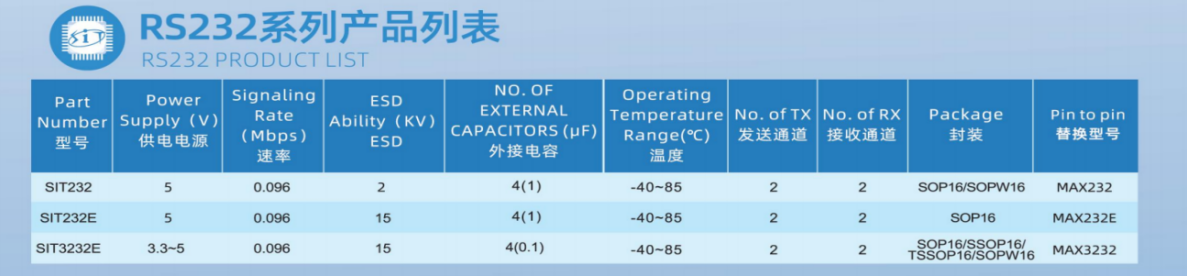
SIT|SIT232
SIT232 - High-Performance RS-232 Transceiver
Signal Conversion
Converts RS-232 signals to CMOS logic levels with inverted receivers for TTL/EIA-232E compatibility, enabling seamless interfacing with MCUs and digital circuits.
Independent Enable/Disable
Drivers and receivers feature individual enable controls for flexible power management.
Multi-device Connectivity
Dual-channel design supports complex RS-232 networks between multiple devices.
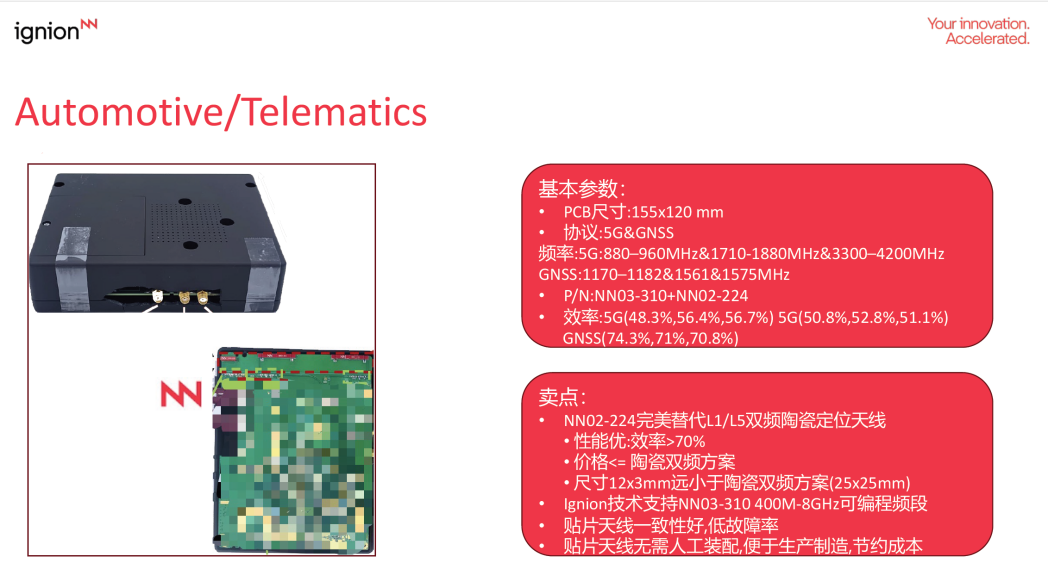
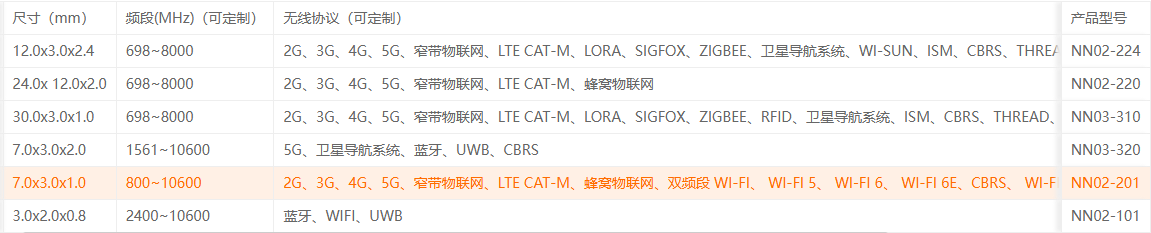
Antenna Selection
The T-BOX antenna is a critical component in vehicular telematics systems, enabling wireless communication between vehicles and external networks. It transmits/receives data including location information, status updates, and remote control commands to support functions like remote monitoring, navigation, and smart connectivity.
Working Principle
Signal Reception:
The antenna captures electromagnetic waves and converts them into electrical signals for the T-BOX receiver circuit, which amplifies, filters, and demodulates the signals to extract data (e.g., navigation instructions).
Signal Transmission:
The T-BOX processes vehicle data (e.g., real-time location, fault codes), modulates the signals, and transmits them via the antenna as electromagnetic waves to external servers/base stations.
Future Prospects
The advancement of China's NEV industry and domestic chip technology will expand applications of local chips in T-BOX systems, with expected breakthroughs in performance, power efficiency and security.
Domestic chipmakers will increase R&D in AI and automotive-grade ICs to enhance T-BOX capabilities for autonomous driving and smart cockpits. A maturing semiconductor ecosystem will further close the gap with global leaders.
Growing adoption by NEV manufacturers will boost market share, fostering self-reliant industry development while stimulating semiconductor sector growth.
This progress demonstrates China's automotive and semiconductor achievements, with domestic chips poised to play greater roles in intelligent NEVs, contributing Chinese innovation to global automotive transformation.
Conclusion
Domestic chips are playing an increasingly vital role in NEV T-BOX systems, driving innovation in smart connected vehicles. Through technological advances and industry collaboration, Chinese chips will continue to empower the NEV sector's growth.
 Wechat
 销售在线
销售在线 联系电话
联系电话